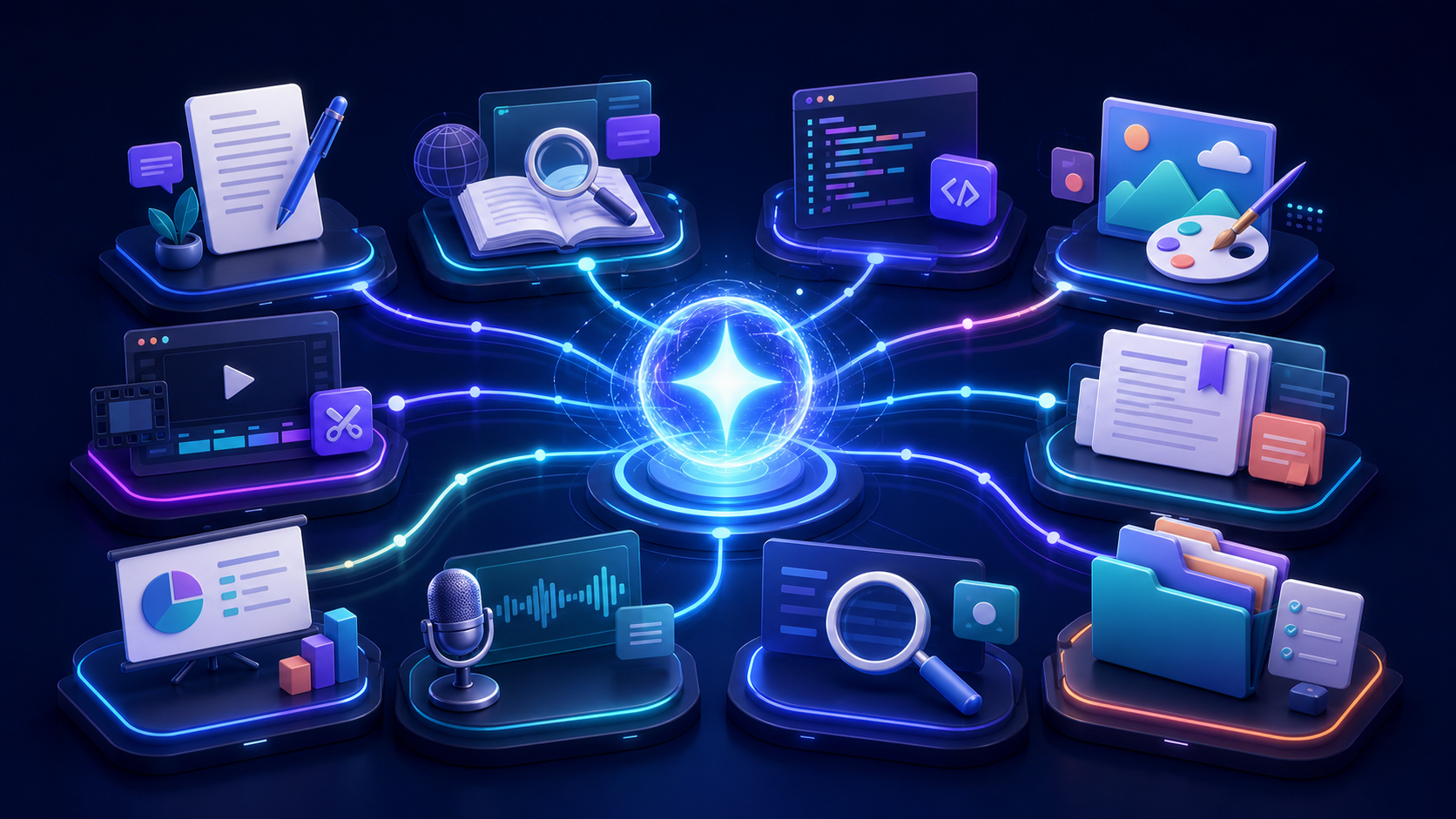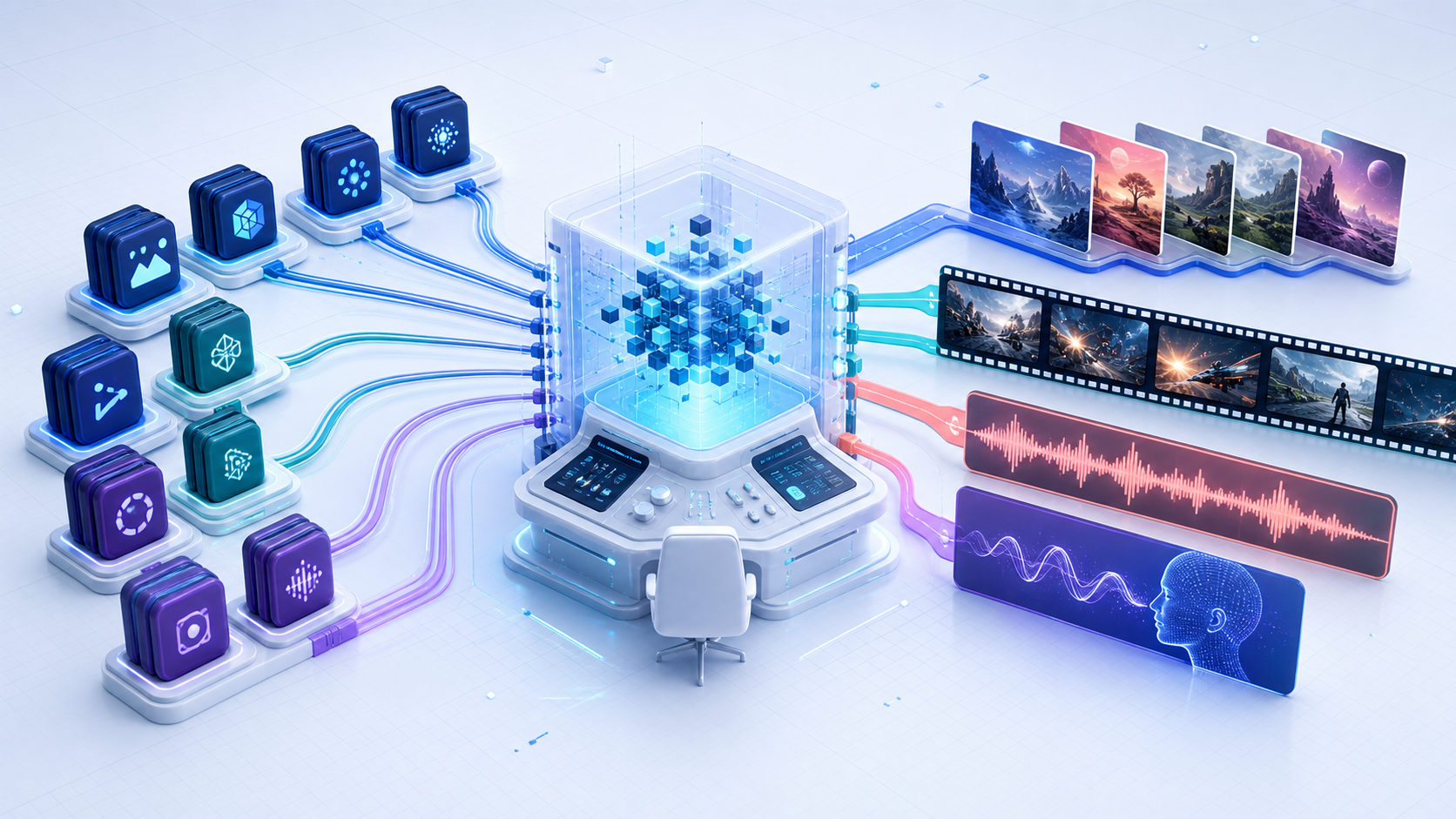
Open Generative AI is an open-source creative studio from the Anil-matcha project that aims to unify a large catalog of image, video, audio, and lip-sync integrations behind one interface. It is designed for creators and developers who want to explore multi-model media workflows without living in many separate browser tabs.
What the studio connects
The project advertises text-to-image, image-to-image, text-to-video, image-to-video, and audio-driven lip-sync workflows. Its catalog references many commercial and open models. The interface code may be self-hosted, but that does not mean every connected model runs locally or is free. Many integrations require provider accounts, API keys, credits, or external processing.
Studio versus model
This distinction is essential: Open Generative AI is primarily an orchestration and user-interface layer. Output quality, data handling, pricing, and rights depend on whichever underlying provider handles a generation.
Good use cases
Compare several media models from one workspace.
Prototype a repeatable image-to-video campaign pipeline.
Let a coding agent coordinate generation and media-processing steps.
Customize a studio for an internal creative team.
Deployment checklist
Keep API keys on the server, authenticate the studio, restrict uploads, validate file types, set request and spending limits, and read each provider’s privacy and commercial-use terms. Do not expose a self-hosted instance publicly with unrestricted generation endpoints.
Verify the current project
Because integrations and model catalogs change quickly, review the current source, license, environment variables, and supported providers in the official repository before installing. Treat claims such as “200+ models” as a changing catalog description, not a guarantee that all models are bundled or cost-free.
Video reference: Watch the Open Generative AI segment from 13:46.